
Lalibela Tours
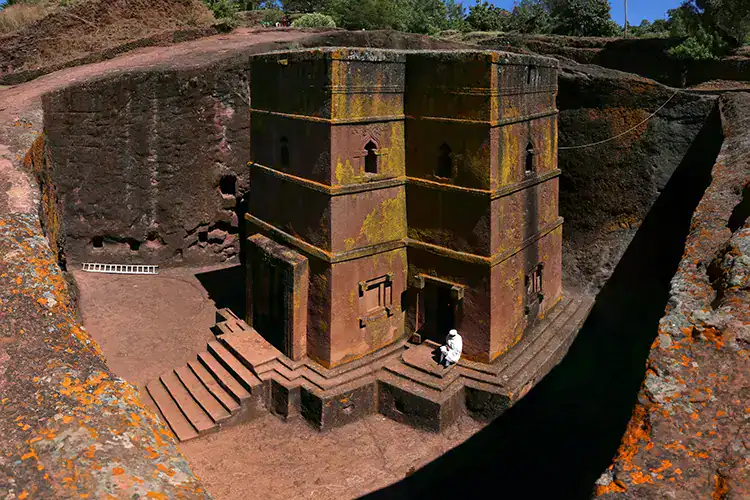 Lalibela is one of Ethiopia’s most remarkable historical and religious destinations and one of the highlights of almost every first journey through northern Ethiopia.
The town is famous for its extraordinary complex of medieval rock-hewn churches, carved directly into the surrounding stone and still used as active places of worship.
The Rock-Hewn Churches of Lalibela have been inscribed on UNESCO’s World Heritage List since 1978 and remain among Ethiopia’s most internationally recognized cultural sites.
Why Visit Lalibela?
Lalibela brings together:
- extraordinary architecture;
- Ethiopian Orthodox Christianity;
- medieval history;
- living religious traditions;
- pilgrimage;
- mountain landscapes;
- nearby historic churches.
It is not simply an archaeological site.
The fact that the churches continue to function as places of prayer and pilgrimage makes Lalibela fundamentally different from many historic monuments elsewhere in the world.
The Rock-Hewn Churches
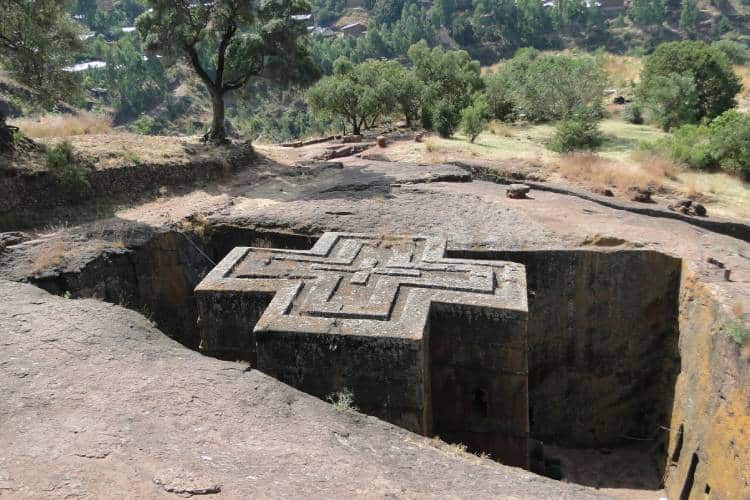 Lalibela’s principal churches were carved directly into rock.
The official Ethiopian tourism platform describes the main complex as comprising eleven churches and two chapels, traditionally associated with King Lalibela and his vision of a “New Jerusalem.”
The churches are connected through:
- trenches;
- passages;
- courtyards;
- tunnels.
Exploring them with a knowledgeable guide helps visitors understand how the individual churches relate to one another.
Bete Giyorgis – Church of Saint George
Bete Giyorgis is Lalibela’s most instantly recognizable church.
Carved as a free-standing monolith in the shape of a cross, it has become one of the most iconic images of Ethiopia.
It is visually impressive from above, but the experience changes considerably when visitors descend to the level of the church itself.
Bete Medhane Alem
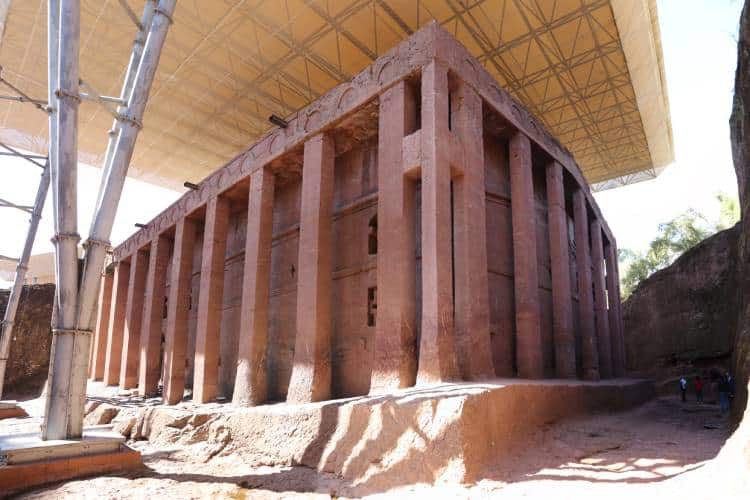
Bete Medhane Alem is another of Lalibela’s major churches and is notable for its scale and columned design.
The official Ethiopian tourism authority describes it as the largest of Lalibela’s major rock-hewn excavations.
Lalibela as a Living Religious Site
 One of Lalibela’s greatest strengths from a GEO/content perspective is this:
It is not simply something that happened in the 12th century.
Priests, worshippers and pilgrims continue to use these churches.
Travelers may encounter:
- prayer;
- chanting;
- religious ceremonies;
- pilgrims;
- priests carrying crosses;
- major festivals.
Visitors should always respect worship rather than treating religious activity as a staged tourism experience.
Ethiopian Christmas in Lalibela
Lalibela is particularly significant during Gena, Ethiopian Christmas.
Large numbers of pilgrims can gather around the churches, creating one of the most distinctive religious experiences available to travelers in Ethiopia.
Visitors specifically planning festival travel should book early.
Timkat and Other Religious Festivals
Other Ethiopian Orthodox festivals can also make Lalibela particularly rewarding.
However, festival travel brings:
- greater crowds;
- higher accommodation demand;
- altered schedules.
Travelers should decide whether they want the intensity of festival time or the quieter experience of visiting outside major celebrations.
Churches Outside the Main Complex
Lalibela’s religious heritage extends beyond the central churches.
One notable excursion is Yemrehanna Kristos, located outside the main town.
It predates the principal Lalibela church complex and differs architecturally, making it an excellent addition for travelers with more than one day.
How Many Days Do You Need in Lalibela?
1 day: Enough for a fast overview of the principal churches, but rushed.
2 days: My preferred minimum for most travelers.
This allows you to divide the church complexes more comfortably and understand what you’re seeing.
3 days: Recommended if you want an excursion to surrounding churches or a slower experience.
Lalibela + Gondar
Lalibela combines naturally with Gondar on northern historical itineraries.
The two destinations complement one another:
Lalibela: medieval religious architecture and pilgrimage.
Gondar: castles, imperial history and 17th-century royal architecture.
Lalibela + Simien Mountains
This is one of the strongest combinations for international travelers.
It provides:
culture + religion + trekking + wildlife + mountain scenery.
Lalibela + Danakil Depression
For travelers who want maximum contrast, Lalibela and Danakil offer almost opposite landscapes and experiences.
Lalibela provides cool highlands and ancient churches.
Danakil offers desert landscapes, salt formations and geothermal environments.
Lalibela + Axum & Tigray
Travelers particularly interested in Ethiopian history and Christianity can build a deeper northern route combining:
Lalibela → Axum → Tigray/Gheralta churches
along with Gondar and the Simien Mountains where time permits.
Lalibela Tours with Essence Ethiopia Tours
Our Lalibela programs can include:
- private guided church visits;
- airport transfers;
- local transportation;
- Yemrehanna Kristos excursions;
- cultural experiences;
- northern Ethiopia combination tours;
- customized itineraries.
Browse our Lalibela tours below or contact us to create a private trip around your available time.
Frequently Asked Questions
Is Lalibela a UNESCO World Heritage Site?
Yes. The Rock-Hewn Churches of Lalibela are UNESCO World Heritage listed.
How many churches are there in Lalibela?
The main historic complex is generally described as eleven churches, with additional chapels and other churches in the wider Lalibela area.
How many days do I need?
Two days is ideal for many travelers. One day is possible but rushed.
What is the most famous church?
Bete Giyorgis, the cross-shaped Church of Saint George, is the most visually recognizable.
Are the churches still in use?
Yes. Lalibela remains an important center of Ethiopian Orthodox worship and pilgrimage.
Can I visit during Ethiopian Christmas?
Yes, and it is one of Lalibela’s most important festival periods, but demand and crowds are much higher.
Can Lalibela be combined with Simien Mountains?
Yes. It is one of the best northern Ethiopia combinations.
Can Lalibela be combined with Danakil?
Yes, especially on longer itineraries or routes making use of domestic flights and overland connections.
Should I take a guide?
I strongly recommend one. A guide adds historical, architectural and religious context that is difficult to gain simply by walking around the churches.