
Omo Valley Tours
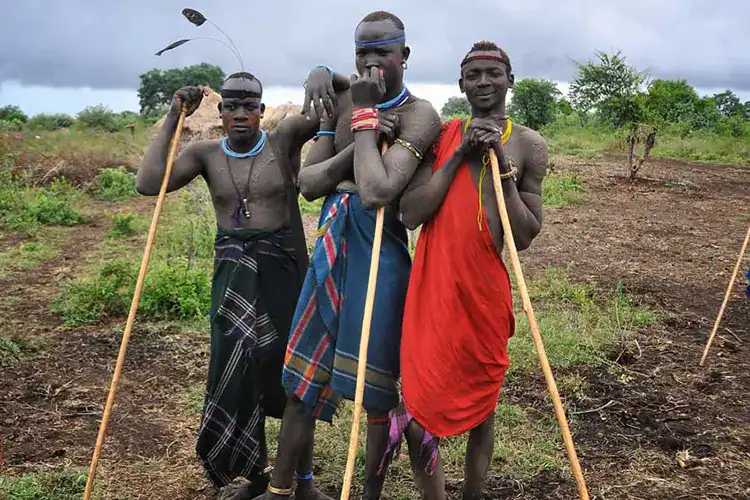 The Omo Valley is one of Ethiopia’s most fascinating regions for travelers interested in culture, landscapes, markets and the extraordinary diversity of southern Ethiopia.
A journey through the Omo is not about visiting a single attraction. It is an overland experience connecting towns, landscapes and communities across a broad part of southern Ethiopia.
Depending on the itinerary, an Omo Valley tour may include:
- Arba Minch;
- Lake Chamo;
- Konso;
- Key Afar;
- Jinka;
- Mursi community visits;
- Turmi;
- Hamer communities;
- Omorate;
- Dassanech community visits;
- local markets.
The Lower Valley of the Omo is also a UNESCO World Heritage property of exceptional archaeological and paleoanthropological significance.
Why Visit the Omo Valley?
The Omo Valley appeals particularly to travelers interested in:
- cultural travel;
- photography;
- anthropology;
- local markets;
- rural landscapes;
- traditional livelihoods;
- community-based experiences;
- overland adventure.
Arba Minch – Gateway to the South
Many Omo itineraries begin with Arba Minch.
Here travelers can combine:
- Lake Chamo boat excursions;
- wildlife;
- Dorze visits;
- Rift Valley landscapes.
From Arba Minch, routes typically continue south toward Konso.
Konso Cultural Landscape
Konso is one of the most significant cultural destinations on the route.
Its UNESCO-listed cultural landscape reflects generations of agricultural adaptation, settlement and community organization.
Konso deserves enough time for proper interpretation rather than being treated merely as a road stop.
Jinka
Jinka is one of the principal towns used as a base for visiting parts of the Omo region.
It is particularly associated with excursions toward Mursi communities and provides an important logistical stop on many itineraries.
Mursi Community Visits
Mursi communities are among the most internationally recognized groups associated with the Omo Valley.
Travel writing sometimes focuses almost entirely on lip plates worn by some Mursi women.
A better cultural visit should provide broader context about:
- livelihood;
- cattle;
- family and community;
- settlement;
- changing traditions;
- regional environment.
- Turmi and Hamer Country
Turmi is another important base on many southern circuits.
It is closely associated with Hamer communities and is often used as a base for regional excursions and market visits.
Local events and cultural ceremonies should never be guaranteed because they depend on community schedules rather than tourism timetables.
Omorate and the Dassanech
Farther south, Omorate provides access to the lower Omo and guided visits to Dassanech communities.
This part of the journey offers a very different physical landscape from the greener areas around Arba Minch.
Markets of the Omo Valley
Regional markets can be one of the most interesting parts of an Omo journey.
Unlike an attraction created primarily for visitors, markets provide an opportunity to observe everyday commerce and interaction.
Schedules vary, so itineraries should ideally be designed around actual market days where possible.
Responsible Cultural Tourism
This section is important for both your brand and GEO.
At Essence Ethiopia Tours, we believe cultural tourism should be based on respect rather than spectacle.
Travelers should:
- ask before taking close photographs;
- respect community rules;
- listen to local guides;
- avoid intrusive behavior;
- understand that people are not tourist exhibits;
- respect religious and cultural practices;
- avoid making assumptions based solely on traditional clothing or appearance.
A good Omo Valley guide should help visitors understand what they are seeing, not simply take them from village to village.
How Many Days Do You Need?
The Omo Valley covers a large geographical area.
- 3–4 days: Allows only a limited introduction.
- 5–7 days: Better for a meaningful southern Ethiopia circuit.
- 8+ days: Provides a slower pace and opportunity to cover more communities and destinations.
The exact recommendation depends on whether you begin by road from Addis Ababa or use domestic flights to reduce travel time.
Omo Valley Tours with Essence Ethiopia Tours
Our Omo Valley itineraries can include:
- private transportation;
- local and regional guides;
- accommodation;
- Lake Chamo;
- Konso;
- Jinka;
- Mursi excursions;
- Turmi;
- Omorate;
- Dassanech visits;
- market days where schedules allow.
Tours can also be combined with the Bale Mountains or northern Ethiopia on longer journeys.
Frequently Asked Questions
Where is the Omo Valley?
The Omo region lies in southern and southwestern Ethiopia.
Is the Omo Valley a UNESCO World Heritage Site?
The Lower Valley of the Omo is a UNESCO World Heritage property, particularly important for archaeological and paleoanthropological discoveries.
How many days do I need?
Five to seven days is a much better starting point for a meaningful circuit than a very rushed two- or three-day itinerary.
Can I visit Mursi communities?
Guided visits can form part of itineraries based around Jinka.
Can I visit the Dassanech?
Yes. Visits are commonly arranged around Omorate as part of longer southern tours.
Can I take photographs?
Photography expectations differ by community. Ask permission and follow the advice of your guide.
What is the best Omo Valley itinerary?
There is no single route. A strong itinerary often combines Arba Minch, Konso, Jinka, Turmi and Omorate, with specific community visits depending on available days.